My name is Olga Santos, and I work at the
Materials Technology & Chemistry Lab at Alfa Laval.
In my role as a materials specialist, I help our customers
with their fouling and cleaning-related issues.
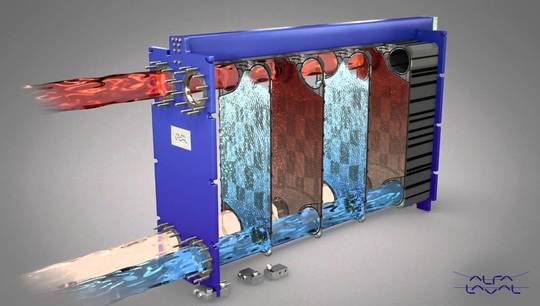
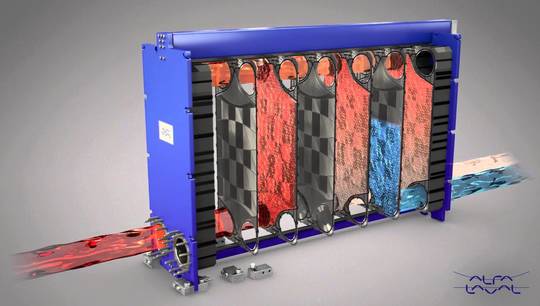
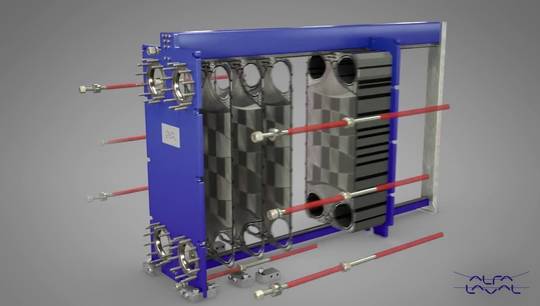
Avoiding fouling in heat exchangers used in
data centers will improve sustainability
since fouling will lead to a decrease in heat transfer.
Typical causes of fouling can be related
to the process conditions:
for example, running the heat exchanger at flows
that are too low, at temperatures that are too high
or not having filters installed. But it’s also related
to the composition of the media:
for example, having hard water, dirty water or
small particles present in the water.
Since data centers typically suffer from particulate
fouling, I think the major reason
they see fouling in the heat exchanger is due to
how they run the heat exchanger.
For particulate fouling, the most important
factor is the flow rate.
In turbulent conditions, the high shear stress
will keep the suspended matter in solution
and the high force of the flow into the wall
will help to remove deposited matter.
This leads to low fouling and a high removal rate.
Alfa Laval can help our data center customers
by having an open dialogue.
If they do experience fouling, they can contact
us and send us a fouling sample.
We will conduct fouling characterization.
Once we know what the fouling consists of
we will develop a custom cleaning
protocol to dissolve it.
It’s very important to use the right cleaning chemicals,
not only to achieve high cleaning efficiency
but also to prevent plate corrosion and gasket damage.
I have three important messages for all data centers.
First: trust Alfa Laval to provide
you with the right design.
Second: run the heat exchanger according
to the proper design conditions.
Third: plan for cleaning already
during the design stage.